http://www.bluedanubeapartments.com/


Apartment Riverside (sleeps 4)

Apartment Prater (sleeps 4)

Apartment Nestroy (sleeps 7)


Showing posts with label Tradition. Show all posts

Friday, September 5, 2014

September in Vienna is a month with Most & Sturm


If you are lucky and visit Vienna during September or October you might want to experience some very local tradition.

During those months the grapes growing around Vienna's vineyards enter their last days of existence.
They are picked by hand and pressed and as a result you will have a delicious Most
This word derives from the latin MUSTUM, meaning young wine. 
As this young wine consists of natural yeast, a chemical process starts, depending on the storage temperature, quicker or controlled and slower (eg in the fridge)
Glucose and fructose are seperated into alcohol and carbonic acid. The result is a sweet, slightly alcoholic and sparkling grape juice, with yeast particles and therefore cloudy
As soon as the alcohol indicates to be at 1% this easy-to-drink-juice becomes a Sturm. You will notice that the alcohol raises quickly to 4%. This is the moment, where Sturm is allowed to be sold in Austria.
The sweetness makes place the alcohol and now it is not only a healthy beverage, but also an alcoholic one. The alcohol will continue to raise and reaching the 11%mark indicates the start of wine production.
The word Sturm (exact translation mean storm) describes the cloudy yeast particles which have a constact chemical reaction if you storage the beverage in a warm place. Therefore never ever close a bottle of Sturm! It will explode within some hours!

Enjoy the Most or Sturm with good, traditional viennese food - visit a vineyard around Vienna to experience these unique feeling of a fresh and healthy, natural drink!

If you explore Austria's countryside we highly recommend Styria in this time of the year. Wine lovers will enjoy the vineyards and the different tastes of the new wines!


Sunday, April 13, 2014

Bermuda in Vienna?

Photo: KF/wikimedia


Did you know that we have a Bermuda Triangle here in Vienna?
Well, don't be afraid to get lost, you may only get drunk.


The Bermuda Triangle is situated in Vienna's oldest part of town between Schwedenplatz and Morzinplatz and near Rotentumstrasse. You can easily acces it by U-Bahn Station Schwedenplatz with the lines U1 and U4.


To be more precise you will find a bunch of unique bars, restaurants and clubs between Rabensteig, Seitenstettengasse and Judengasse and up to Ruprechtsplatz. By the way, there you'll find the Ruprechtskirche, one of the oldest churches in Vienna.

The building in Seitenstellengasse 4 is home to an israelic temple, therefore do not be surprised to find police wandering around.

The founder of the Bermuda Triangle was the Restaurant Krah Krah, it's name simulating the sound of a crow. It was in 1980 that Sepp Fischer invented a beer bar, today seen everywhere. Guests come from everywhere to taste one of the 60 beers, you even can try the Kulmbach Kuminator, the strongest beer of the world.

Other bars in Bermuda are:  Stehachterl, Bermudabräu, Casablance, Gnadenlos, Slammer, Kaktus, Kuchldragoner, Mojo, Morgans & Vulcania.


So get out, book your place, enjoy sitting al-fresco in summer and endulge in Vienna's traditional food.


Photo: Krah Krah

Thursday, November 28, 2013

Advent, Advent ....

This weekend the traditional "Adventzeit" will start. Children will say:


"Advent, Advent, ein Lichtlein brennt, 
erst eins, dann zwei, dann drei, dann vier,
dann steht das Christkind vor der Tür."


(Advent, Advent, a candle burns, 
first one, then two, then three, then four,
and then the Christkind has arrived)

Advent is the time before Christmas when Christian people are in expectant waiting and preparation for the celebration of Christmas. "Adventus" comes from the Latin and means "coming".

It is also the time when traffic jams are starting to build up, often mixed with weather chaos and huge queues in front of the cashiers. And the time, christmas lighting is turned on and mulled wine is drunken excessively.

And time of the "Adentkranz".
This is a green spruce wreath decorated with 4 candles and some christmasy schnick-schnack.
Either you buy a ready made wreath or you buy pine bundles and with lots of patience you manage to get a wreath, pin in the candles and use your creativity to match nice items for decoration. It will take at least an hour to finally have the wreath ready.

The story goes that the evangelic priest Johann Hinrich Wichern had a wooden wreath with 24 candles, 4 big ones for the 4 sundays and 20 "normal" ones.
Each day one more candle was lit so that finally on the 24th there were 24 candles enlighting the church. Each day the light was brighter and prepared everyone for the coming of Christ as the "Light of the World".

Nowadays it's a big business for the flower shops and each year prices increase and quality decreases.
So, if you dont want to spent 50 euro, the better, you make a DIY wreath.

Austrian families will have had lit up the first candle this sunday. And each next sunday the light will become brighter, with the increased number of candles burning. So, wherever you go in Vienna, watch out for the green wreaths.

Unfortunately you will not find it in bluedanube apartment as we decided to put safety over tradition. Tradition also has it that many of the wreaths start small fires .....

Here is my hand-made DIY wreath, done with lots of love, patience and passion.


Saturday, November 23, 2013

Schoenbrunn Christmas Market


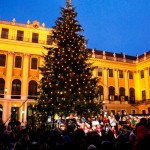
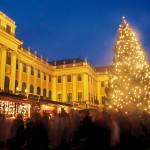
If you want to combine one of Viennas top locations with romantic Christmas feelings, the Schoenbrunn Christmas market is the perfect place to go. Located in front of the palace, the advent village is providing an unforgettable atmosphere. It feels more relaxed and less crowded than other markets in Vienna. This year, when the market celebrates its 20th birthday, around 80 exhibitors are offering anything from local hand crafted artifacts to fancy Christmas tree decorations, made of various materials like wood, glass, stone, and pottery. No need to leave hungry or thirsty as you can enjoy a lot of specialties like fine Austrian wines as well as punches, mulled wine and tea specialties, including non-alcoholic and sugar-free varieties. Gingerbread and Christmas biscuits go well with these fine drinks, but if you are not so much into sweets, also soups and stews, baked potatoes, raclette, pasta and different kinds of sausages are available.
Every evening local and international choirs and gospel groups will perform traditional Christmas music in front of the palace under the giant Christmas tree.
Children will enjoy the market as well with interactive games, Cookie-baking at the Imperial Bakery or the “Schloss Schoenbrunn Experience” in the Children’s Museum.
Once Christmas is over, the market will be transformed into a New Year’s Market which will open on December 28th to January 1st.

Directions for visitors staying at bluedanube apartments: U1 to Karlsplatz and the U4 to Schoenbrunn. Approx 20 minutes.


Christmas Market Schoenbrunn
November 23rd to December 26th, open daily from 10am to 9pm,  
December 24th 10am to 4pm
December 25th and 26th 10am to 7pm
New Year’s Market Schoenbrunn
December 27th to January 1st, open daily from 10am to 7pm

Further Information can be found at www.weihnachtsmarkt.co.at

Wednesday, June 5, 2013

Cafe Central in Vienna waits for you in a refurbished setting


This famous traditional café has a history of 130 years, was first opened in 1876 and at the turn of the 20th century was a popular meeting point for leading persons in the world of art, literature, politics and science.
Arthur Schnitzler, Sigmund Freud, Peter Altenberg and Leo Trotzki - they all  loved their second home while sipping their coffee!
Then, like today, the legendary literature café was a meeting point for all ages. Unique architecture meets classic Viennese cuisine. Finest home-made pastries make every visit a special experience.

BUT: This tradition will be closed for refurbishment from 15th July until 11th August 2013.
So be aware that you only my enter from 12th August. To make a reservation call:  +431533 37 63 ext 24

Tuesday, February 21, 2012

Fachingsdienstag in Vienna, Pancake day in London


Dienstag is Tuesday
Fasching is the equivalent to carneval!
Fasching is Fastnacht in Germany
Fasching is celebrated mainly in catholic areas

End of Fasching is tomorrow, called Aschermittwoch, Asd Wednesday.

And that Wednesday will be in the week of 7 sundays before Easter - always.
Therefore Faschingsdienstag is never before the 4th of February and never later than the 10th March

Here in Vienna we celebrate that day with the traditional Faschingskrapfen,  some people will be costumed the whole day and some will just drink a lot of bubbly wine! It's the heyday of the carneval time!

Enjoy!

Thursday, February 16, 2012

Vienna Opera Ball - 10.43


The official opening was successful!
Let's waltz through the night!

Vienna Opera Ball 2012 - 7.45pm


Red Carpet is laid out - few celeb spotters find their way
still some time to wait!
5.200 guests are expected!

Tuesday, December 20, 2011

Mozart, Hunters & Vienna's christmas markets


When you're currently in Vienna you'll have 4 more days to enjoy the many christmas markets which are packed full of food stalls selling all kinds of delicious wintery goodness. 

Mulled wine may be the most traditional, but you'll definitely should try Jagatee (spell it: jagate) and Punsch.


Let's start with Jagatee - this one really will boost your al level. Its the ultimative austrian skiing drink, hot, and a mix of black tea and pure dark rum with a significant dash of red wine and Obstler (schnaps). Smell it and you'll get drunk!
And by the way: Jagertee is a licensed austrian product, only here to be called like that. Drink it in Germany and you have to call for Huetten- or Foerstertee.
And don't forget Jagatee translated means Hunter's tea! And the hunter in Germany is the foerster! Got it?


Punch is quite famous in Britain too, we all know. So how did it make it's way to Austria?
Easy peasy with a pop star of course! But a star of the 17th century: Wolfgang Amadeus Mozart!


It is said, that punch was brought from India to Britain, quickly became very fashionable and Mozart encountered this drink on his travels in England.
No question he was delighted to show off the recipe, when he returned to Vienna.


The word Punsch seems to derive from the indoeuropean "fuenf" (in english five). 5 spices were said to be necessary for a punch: Ingwer, cardamon, cinnamon, cloves and fennel. The same we need to activate our chakras!


The word Pinsch is also familiar with Punsch, but Pinsch in Vienna means getting a 5 in school, according to our school system the fail grade!


Ok guys, that's enough now, come on and let's head to the next christmas market, enjoy the buzz, the smell and the delicious drinks, not to forget the yummy food!
And if you don't find your way home afterwards, there are enough carriages who'll take you home to bluedanubeapartments, where you can rest in comfort and style!

Tuesday, December 6, 2011

St Nicholas & Krampus ..... dating back to the Habsburger

 Archduchess Marie Christine: The distribution of the gifts on the Feast of St Nicholas, gouache, 1762
© Schloß Schönbrunn Kultur- und Betriebsges.m.b.H. /Schloss Schönbrunn Kultur- und Betriebsges.m.b.H.


On 6 December the Feast of St Nicholas, the most important of the church festivals in the period leading up to Christmas, is celebrated in Central Europe


One of the oldest traditional customs, it has always been a festivity for children. In Austria, St Nicholas is accompanied by the diabolical figure of Krampus: the saint is benevolent and brings gifts for the children, while the role of the Krampus is to punish childish misdemeanours. Thus gift-giving was not originally associated with Christmas itself, which was a purely ecclesiastical feast; Christmas as a family festivity at which children received gifts is an invention of the Biedermeier era.


St Nicholas’s Day was celebrated in all social classes, including the imperial family: at Court gifts were distributed in the evening of the 5 December, and on 6 December the imperial family attended mass at the Convent of St Nicholas on Vienna’s Singerstrasse, later dissolved by Joseph II.


There exists a well-known depiction of this custom executed by Archduchess Marie Christine, a daughter of Maria Theresa, in 1762. Set in a small family living room, it shows a number of the empress’s children discovering gifts in their shoes under the fond gaze of their parents. This scene has often been adduced as evidence indicating that the Habsburgs led an almost bourgeois life within the inner circle of the family. However, recent research has demonstrated that Marie Christine based her depiction on Netherlandish models, copying them down to the smallest detail. As the furnishings of the room and the way in which the figures are depicted have absolutely nothing in common with ceremonial life at Court, it is now assumed that this scene is a kind of playful attempt to depict the ideal of middle-class family life that was just starting to emerge in the age of Enlightenment. It can be compared to the pastorals of the Rococo era, where the nobility fled the rigid world of court ceremonial for the ostensible idyll of rustic life.


The scene contains a number of details that are still associated with the Feast of St Nicholas. The children’s shoes are filled with sweetmeats and toys; while one of the girls is enjoying her new doll and the little boy in the centre is laying into the sweets, the older boy only has a birch in his shoe, an unwelcome gift from the Krampus …

Learn more and log on to The Habsburger (where this informative article is copied from)


Thursday, July 28, 2011

Drink a Heurigen at the Heuriger! Cheers!

It's raing cats and dogs - yes - this weather these days in Vienna is similar to the UK.
Rainy all day, damp, greyish - all in all, not a summer weather to go to the lakeside or to climb a mountain.

But Vienna has that much to offer, dont mind the weather!


Even if it's damp and not sunny, as long as there are no gusty winds and no rain why not pop into a Heurigen and chill the Viennese way!
The definition Heurigen comes from the german word 'heuer', which means this years'.
We use it for 2 meanings:

Heuriger can be the wine, which is harvested this year
Heuriger can be the place, where the winemaker sells his wine

It is a typical Viennese vocabulary, as more in the West of Austria, in Styria for example you would say Buschenschank, if you mean the winesellers place.

That said, Viennese people go to the Heurigen, sit at the Heurigen, often in the private garden of the winemaker and drink Heurigen! Got it?


It was in 1784, when Kaiser Franz Joseph allowed the winemakers to sell their own wine in their own house without any special licence. 
Until today the tradition Heurigen is allowed  to open for a special period of time during the year only, while selling their Heurigen together with a small variety of traditional and local food.
This is why in a good Heurigen you will find only some small amount of cold, rarely warm food and almost never a menu card.

Sometimes local pastries are sold, which are home-made and delicious. Like this "Kardinalschnitte"


To know when the Heurigen is opened, just look out for the Buschen, a green bunch of pines hanging above the entrance of the Heurigen. If it is out it is "ausg'steckt", meaning the Heurigen sells it's Heurigen. Go for it!

Monday, June 20, 2011

Griessnockerln or Frittaten

Did you understand our title?

Again this post is about food!
Meanwhile you will have learned that Vienna is all about food!

This time you can opt between two "Einlagen" for a traditional "Rindsuppe". Ok then, Einlage means the filling of a soup, something to put into the clear broth.
Rindsuppe otherwise means the clear broth, gained by cooking beef with vegetables for ages!
Take a look at my Tafelspitz post and you'll learn more.

Back to the fillings:
Griessnockerln are small dumplings (Nockerl) made of semolina (Griess), eggs and butter. Interestingly there are nations, who absolutely deny semolina in their kitchen. Like the UK, I have learned that british people love that much foreign food, but in gerneral hate semolina.
But trust me, it's absolutely delicious and a must, if eating out in Vienna!


Frittaten are loved by everyone as I gather, as they are simple pancakes with a dash of salt, sliced very finely and put into a tasty soup. Simples!

The funny word Frittate seems to derive from the italian frittata, which means something like an omelette. So we have several words for the english pancake: crepe, palcinta, Pfannkuchen.

But with Frittaten you'll always understand sliced pancakes in soup, if you order Palatschinken you'll get mouthwatering sweet pancakes filled with jam or Nutella. The choice is yours!


Yummy! Enjoy these most loved and most common soup appetizers of the Viennese kitchen!

Saturday, May 28, 2011

A Leberkas Semmerl please! Fast Food with Tradition!

Some months ago we did talk about the Wurstsemmel - one of the most traditional fast food in Vienna.
But there are several other mouthwatering, savoury and unique tasty delicacies.


Let's try the Leberkas.
Sometimes also Leberkäs or Leberkäse. In Bavaria you'll find people calling it Fleischkäse.
It's not original Viennese, but it is a Viennese traditional Fast-Food though.
 If you translate it word by word: "Leber" means liver and "kas" or "käs" or "käse" meaning cheese.
Ok then, but it has definitely nothing to do with liver and cheese.


This kind of sausage was invented around 1776, not in Austria but in Germany. The name probably derives from the old German: LAB for clotting and QUAS for feast.
But only probably, because there is another saying too:
KAS means in bavarian german some kind of bulky, compact material, in good old Viennese wording "Gatsch"
So, make your choice!

Anyway it makes sense, as the mix of minced pork and beef will be baken in the oven in a rectangular baking-tin.

There are various types: my favourite, whenever I ever eat it, is Käseleberkäs! This one indeed has cheese in it! Kind of confusing, innit?

How you eat it?
Where you get it?

I recommend to try it as a filling in a good crispy "Semmerl" and the best place to order it is at one of Vienna's typical "Wuerstelstand" which will lead me to my next posting, for sure!

 
Just a final warning:


1. eat it hot!
2. don't eat it in public transport as it has a strong smell!

And beware! The little snack has approx 650 calories!

Tuesday, April 19, 2011

Some Austrian trivia about Easter Time .... and more


-  NAME
In Austria children believe that the Easter bunny hops over the fields and makes its way to the gardens. The bunny is the official symbol of fertility since the 16th century. But the bunny and the egg are also symbols of the Anglo-Saxon goddess Eastre, after which Easter has been named.
-  COLOURS
The customary act of painting eggs is known as Pysanka. In Austria we use to paint the eggs and colour boiled eggs. This custom was taken by the pagans, to whom colours had a special meaning: red for death of Jesus, green for hope, yellow for wisdom, just to name a few.

-  HIDE 'N' SEEK
Tradition has it that we hide chocolate eggs, preferably in a garden and children then will have to seek them.
-  FOOD
In Austria we love to eat a "Pinze", a deliciouse sweet yeast bread, some smoked ham cooked in a bread dough, called "Osterschinken"

-  DECORATION
We also decorate the houses with consecrated pussy willows, decorated with eggs hanging around. Is was tradition in Jerusalem to use palm branches to show your devotedness to Jesus. In absence of palm trees we use willow branches


-  TREATS
Chocolate eggs were made for the first time in Europe, in the 19th century. Till date, they remain one of the favorite Easter treats.

Easter is the top-selling confectionery holiday in the west, second only to Halloween.


-  STATISTICS
On Easter, 76% people bite off the chocolate bunny ears first, while 5% bite the feet first and 4% eat the tail first.


-  SYMBOL
Right from ancient times, the egg has been regarded as a symbol of rebirth in most of the cultures. Eggs, bonfires, candles, lily, cross, palm, bunny and lamb are the most popular symbols of Easter.

-  TIME
Just like Passover which is dependent on the phases of the moon and has different dates each year, Easter is also a movable feast. BUT Easter always falls between March 22nd and April 25th.


-  HISTORY
The custom of giving eggs at Easter dates back to the time of the Egyptians, Persians, Gauls, Greeks and Romans.

-  VATICAN
Every year on Easter, Pope gives his "Urbi et Orbi" (papal address) to the world.


-  INTERNATIONAL
Easter is known by different names across the world. Some of them are: Easter (english), Paques (French), Pascua (Spanish), Pasqua (Italian), Pashke (Albanian), Ostern (German), Pascha (Greek),  Paaske (Norway), Pasen (Holland) and  Pask (Swedish)


-  COMMERCIAL

Egyptians were initially the ones who exchanged eggs to symbolize the resurrection of Christ. It was later that the tradition was passed down to early Christians. But it was forbidden by the church to donate eggs. As people loved this habit it was adapted and the eggs where hidden in neighbours garden.

Thursday, April 14, 2011

Tafelspitz stands for Plachutta beef


There's nothing more Viennese than the Tafelspitz.
So it's a must to have before you leave Vienna.

It is said that already in the 16th century beef was brought over to Vienna from Hungary and so became an important part of the Austrian Cuisine.

The story goes that good old Kaiser Franz Josef's habit was to eat very hasty and quick. Courts tradition in turn did not allow anyone to eat before or after the emperor has laid back his cutlery. Therefore his entourage often left the meal terribly hungry. In consequence they went to the Sacher, to get what they needed.
Famous Anna Sacher invented a dish, which was able to boil and simmer for ages without loosing quality. This is how the story goes about the creation of Tafelspitz.
Soon also Austrias emperor loved to have his daily beef, be it a part of the tip or the rump.

Tafelspitz is served with spinach, fried egg, potatoe mash and different sauces and gravy. 


Tradition has it that you eat the hearty soup served in a copper cauldron together with the Markscheibe on toasted dark bred.
Tafelspitz at its best!

Try it at Vienna's best place .... Plachutta, where this traditional dish is served in its unique way.
The oxes and calves are all  from the farmyard grown up in the juicy meadows of Lower Austria and Styria. You will definitely taste the difference!

You can opt for 3 different places to try out:

-  At vienna's city centre
wollzeile 38, 1010 Vienna
+43 1 512 15 77
wollzeile@plachutta.at

-  Near schloss schoenbrunn
Auhofstrasse 1, 1130 Vienna
+43 1 877 70 87
hietzing@plachutta.at

-  At vienna's vineyards
Heiligenstädterstrasse 179, 1190 Vienna
+43 1 370 41 25
nussdorf@plachutta.at


The yummy part is where rump and silverside join to form the bum!


Tuesday, April 12, 2011

Let's cook ..... Wiener Schnitzel!


I think it's time to focus on food again.
What about cooking the favourite austrian dish? Some years ago I was teaching ladies from all over the world how to make a real good Schnitzel. Let me share with you now this delicious recipe!

This probably is the most traditional Austrian dish you can get.
The original Wiener Schnitzel is made from veal, but it can be made also from chicken, turkey or more popular in Vienna, from pork.
And tradition also has it, that it goes best with potatoe salad and a slice of lemon.


Wiener Schnitzel
 
  • 1 kg Turkey breast
  • 2-3 eggs
  • 500g breadcrumbs
  • 200g flour
  • Salt
  • Oil
Cut the turkey into slices, like you want the Schnitzel to be.
Put the flour in one bowl, the breadcrumbs in another and the mixed eggs in another.
Salt the flour.

Now take each slice of meat and bed it into the flour. After coating it put in the next bowl with the eggs, coat it again well and finally coat it with the breadcrumbs. Get rid of any loose breadcrumbs by pressing them down firmly.

After doing so with all the meat heat up the oil in a big pan. Pour in enough oil, so that the Schnitzel can „swim“ slightly.

Fry them at medium to high heat, very slowly and carefully, otherwise they will burn immediately.


Potatoe Salad
 
  • 600g potatoes
  • 250 ml beef stock
  • 60g sliced spring onions or leek
  • 6 tbsp vegetable oil
  • 3 tbsp vinegar
  • Salt, pepper, mustard
Cook the potatoes, then peel them. Cover them with the beef stock immediately after slicing them – add onions—mix together.


It should result in a slightly creamy dressing.

Add oil and vinegar (apple vinegar preferred) and a dash of salt, pepper and a bit of english or Dijon mustard and pour over everything over the salad.

Monday, April 11, 2011

Vienna Easter Markets


Easter Markets are open again in Vienna. Two of the best known in Vienna can be found in the city centre ('Freyung Easter Market') and in front of Schoenbrunn Palace. They are not as big and not yet as popular as Christmas markets in Vienna, but certainly worth a visit. 
Freyung Market offers a variety of paschal and not so paschal products at more than 50 stands as well as the biggest egg-mountain in Europe (don't try to climb it!). It is open daily until 25th April from 10am to 8pm.
Schoenbrunn Market is at similar size with around 50 stalls selling the usual suspects, and also offering a nice program for kids (like producing easter rabbits from almond paste - marzipan) as well as for adults (from Jazz performances to Schubert's Missa in C in the lovely Schoenbrunn Chapel). Schoenbrunn Market is open daily until 25th April from 10am to 7pm. For further details check out this site.

Go there and enjoy Easter time in Vienna!

Wednesday, April 6, 2011

What do William & Kate have to do with Austrian candies?


until 17th April you can bid on this couple on ebay - hurray!


The story of PEZ started in Austria nearly a century ago.

In 1927 the PEZ candy was invented by Eduard Haas III. It was originally developed as "luxury confectionary for an elegant world" - with valuable peppermint aroma. The product primarily addressed adult consumers at this time. PEZ was a refreshing candy and a cigarette substitute for smokers, and the candies were sold in small tins.

Sometime in the 40ies Eduard Haas III had the idea of creating a PEZ dispenser. Thus in 1949 the PEZ box was first invented: A small plastic candy dispenser shaped like a cigarette lighter.

In the 1950s the dispenser became a best-seller in the United States, with Japan following in the 1970s.

Eduard Haas III quickly realized the potential of his product for children; the company began developing fruit-flavoured varieties and the cartoon heads were put on top of the PEZ dispensers, starting with the popular Disney characters Mickey and Donald.

Since then PEZ dispensers have become highly sought-after collector’s items and PEZ has built a strong standing as a cult brand.

PEZ nowadays is available in over 80 countries, the brand’s key markets are Europe, the United States and Japan. The Group manufactures 80 million dispensers and 4.6 billion PEZ candies every year.

Tuesday, March 8, 2011

Fasching is Karneval is Fastnacht is Carneval ... the finale!


Ok, now whatever wording you wanna take, it all means the same.
But FASCHING is the Viennese correct term. 

The word Fasching dated back to the 13th century when the words vaschanc and vaschang were used in German language. It seems to derive from „Fastenschank“, meaning the last (alcoholic) serving before the start of lent.

So here we are: tradition has it that today you may have seen some nice "Faschingsumzüge" (carneval processions) alongside the streets. You may also have noticed that in some shops people were costumed, eating "Faschingskrapfen" (see previous post) and drinking bubbly wine!

And whenever you are in Germany during that time, you'll notice that the Krauts are able to celebrate even more jolly and wild this last day of Karneval!

And when in the German centre of Carneval, in Mainz, people say "Helau" as the traditional greeting, in southern Austria, in Carinthia, you'll hear a "Lei, Lei" tonight!

Having said this:

Lei, lei and good bye!


Monday, March 7, 2011

The taste of Austria

When you think of Britain and taste, what is your first idea?
Fish'n'chips maybe?
Which drinks do you associate with a country?
Which sweets do you recall, when thinking about a specific destination?

Well, all those questions come into mind, when travelling around and being open to local traditions.

So, what about Austria and Vienna or Salzburg?

Here are my top 5 typical food experiences, which you should not miss out:


1. Manner Schnitten

since ages a constant sweet companion for all ages and all situations

2. Wiener Schnitzel


the most famous austrian main dish and definitely best eaten in Vienna - a Must

3. Sachertorte 
No birthday party, no coffehouse, no housewife without this cake - but trust me, the best one is the home made one! (send me an email, if you want to buy one from me!!)

4. Salzburger Mozartkugel 

A delicacy often copied, but only this original is the abolutely best! A unique taste, that melts in your mouth!
Buy it in the supermarket and not in the tourist shops, you save looooots!

5. G'spritzter


The traditional drink for all occasions, best drunken at a Heurigen, a bit outside of Vienna.
A good big dash of white wine with some soda comes as a refreshing surprise especially in summer!


Don't leave Austria without having tasted these flavours - you'll definitely will miss something!